I started fishing with a borrowed rod, no boat, and a stretch of riverbank ten minutes from my apartment, and honestly that is still how I would tell anyone to start. Bank fishing does not need a launch fee, a trailer, or a truck to tow one. It needs a rod, a handful of basic tackle, and a spot to stand, which makes it the cheapest and least intimidating way into the sport by a wide margin. Everything in this guide assumes you are starting from zero and want to catch something on your first few trips, not chase a personal best.
what counts as bank fishing
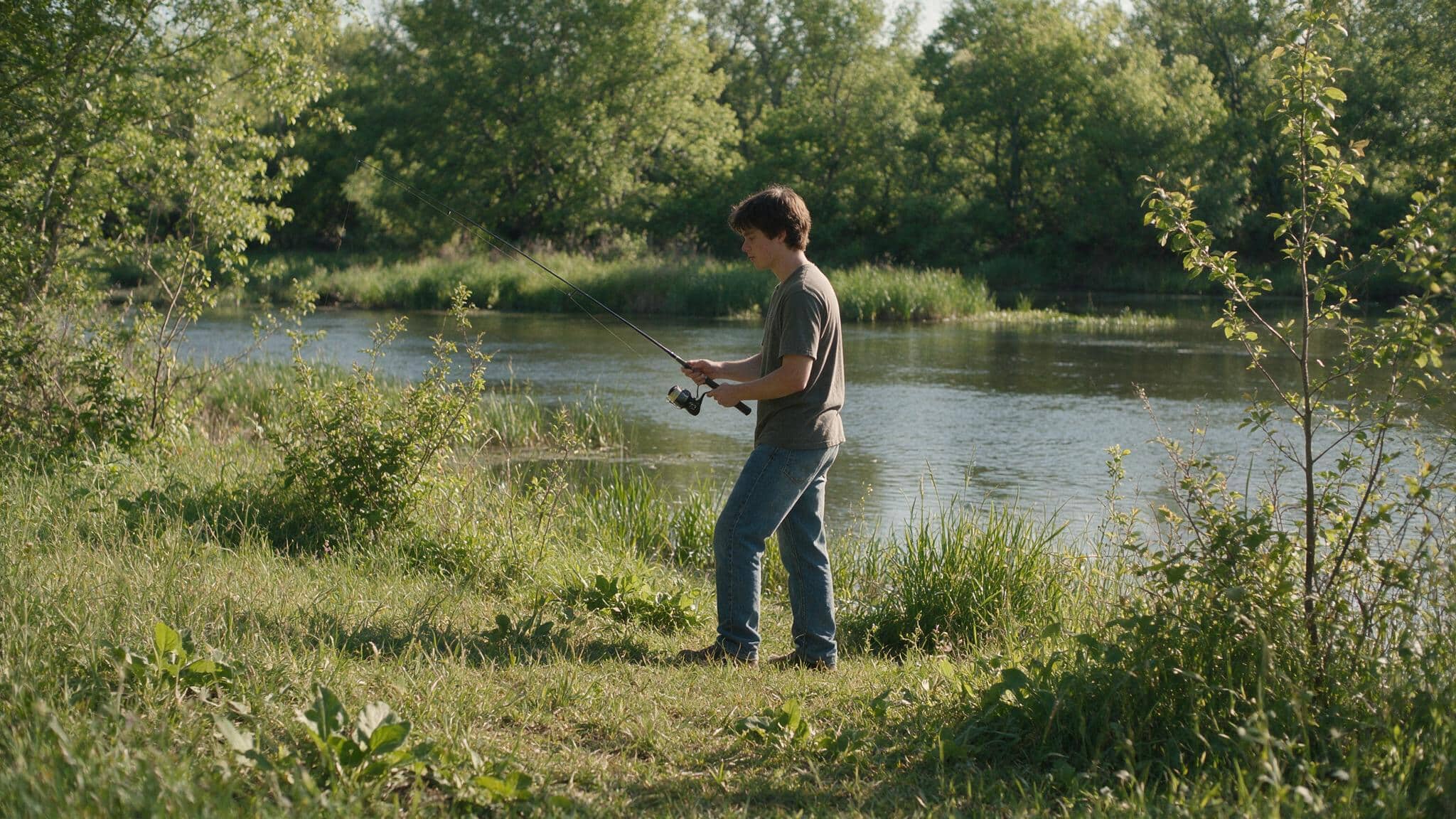
Bank fishing means fishing from the natural edge of the water, a riverbank, a lakeshore, a creek edge, as opposed to a built structure like a dock or pier or actually being on the water in a boat or kayak. It overlaps with shore fishing generally but usually implies plain, undeveloped bank rather than a maintained access point. That distinction matters because bank fishing spots often require a bit more scouting and a bit more comfort with uneven ground, brush, and mud than a paved boat ramp or a manicured park shoreline does. None of that makes it harder to succeed at, it just changes what you should expect from your surroundings.
starter gear you actually need
Skip the twelve-piece combo kit at the big box store. A single medium spinning rod and reel, in the 6 to 7 foot range, handles the overwhelming majority of bank fishing situations for bass, catfish, and panfish. Add ten pound monofilament line, a small assortment of hooks and split shot weights, a few bobbers, and a handful of soft plastic worms or jigs. That is a complete bank fishing kit for well under a hundred dollars, and every piece of it gets used. Resist upgrading gear before you have fished enough to know what you are actually missing, since most beginner frustration comes from technique, not equipment. A cheap pair of needle nose pliers and a small first aid kit round things out, since hook removal and the occasional scrape are routine parts of learning bank fishing, not signs something went wrong.
basic knots and rigging for beginners
Learn one knot well before you worry about the rest. The improved clinch knot ties your line to a hook or lure reliably and takes about five minutes to learn from a video and another few trips to make automatic. For rigging, a simple slip sinker setup, a weight above a swivel with a hook and short leader below it, covers bottom fishing for catfish and panfish without needing anything fancier. As you get more comfortable, a Texas-rigged soft plastic worm adds a snag-resistant option for fishing bank fishing spots with brush and grass where a bare hook gets stuck constantly.
how to pick a bank fishing spot
Public parks with lake or river frontage are the easiest starting point, since access is already established and usually free. Look up your state wildlife agency’s public access map before driving anywhere, most states publish exactly where bank fishing is legal and open to the public, along with any special regulations for that stretch of water. Avoid posted private property even where the water itself might be public, and if a bank looks heavily trampled with worn paths to the water, that usually means other anglers already found it productive, which is a decent sign for a first trip.
reading bank structure as a beginner
You do not need years of experience to start noticing what matters. Look for anything that breaks up a plain, featureless bank: a point, a fallen tree, a patch of rock instead of mud, a bend in a river where current has carved deeper water. Fish relate to that kind of structure far more than to open, uniform bank, and picking even one obviously different feature to fish first beats walking randomly until something bites. Give each spot a fair try, ten or fifteen casts with a couple of different baits, before deciding it is empty and moving down the bank. Our full shore fishing guide goes deeper into reading water from land if you want the longer version once the basics click.
time of day and weather for beginners
Early morning and the last couple hours before dark produce more consistently than the middle of the day, especially once the weather warms up, and that pattern holds true almost everywhere you will bank fish starting out. An overcast day with light wind is about as good as beginner conditions get, since low light keeps fish active longer and a little surface chop hides your movement and shadow along the bank. Do not write off a slow, sunny afternoon entirely, since panfish and catfish stay catchable through conditions that shut bass down, and beginners targeting the right species for the conditions catch more fish than beginners fishing the wrong species at the wrong time.
bait vs lures when you are starting out
Live bait forgives more mistakes than lures do, which makes it a reasonable starting point if catching something on your first few trips matters more to you than building casting skill. A worm on a basic bottom rig catches panfish, catfish, and often bass with very little technique required. Lures take more practice to fish effectively but teach you faster how retrieve speed and presentation change results, so mixing both early on, bait on one rod while you practice casting a lure on another, tends to build skill faster than sticking with only one approach.
etiquette and safety basics
Give other anglers space, both because it is polite and because crowding someone’s spot rarely improves your own results. Watch your backcast around trees, other people, and power lines, which are more common near developed bank fishing spots than people expect. Check the bank itself before you commit to a spot, since mud, loose rock, and steep drop-offs cause more bank fishing injuries than anything related to the fish. A basic pair of boots with real grip solves most of that risk on its own, and telling someone where you are headed before a solo trip to an unfamiliar bank is a habit worth building early.
Bank fishing will teach you more about reading water in a season than any amount of gear research does. Start cheap, fish spots other people have obviously already found, and pay attention to what the bank looks like where you actually catch something. That pattern, more than any specific rod or lure, is what turns a beginner into someone who can walk up to unfamiliar water and find fish without needing a boat to get there first.