A sabiki rig is built to catch bait, not the fish you’re actually after. It’s a vertical string of several small hooks, each dressed with flash or feathers, meant to trigger a reaction strike from schooling baitfish rather than an intentional bite. Ignore that distinction and you’ll fish it wrong.
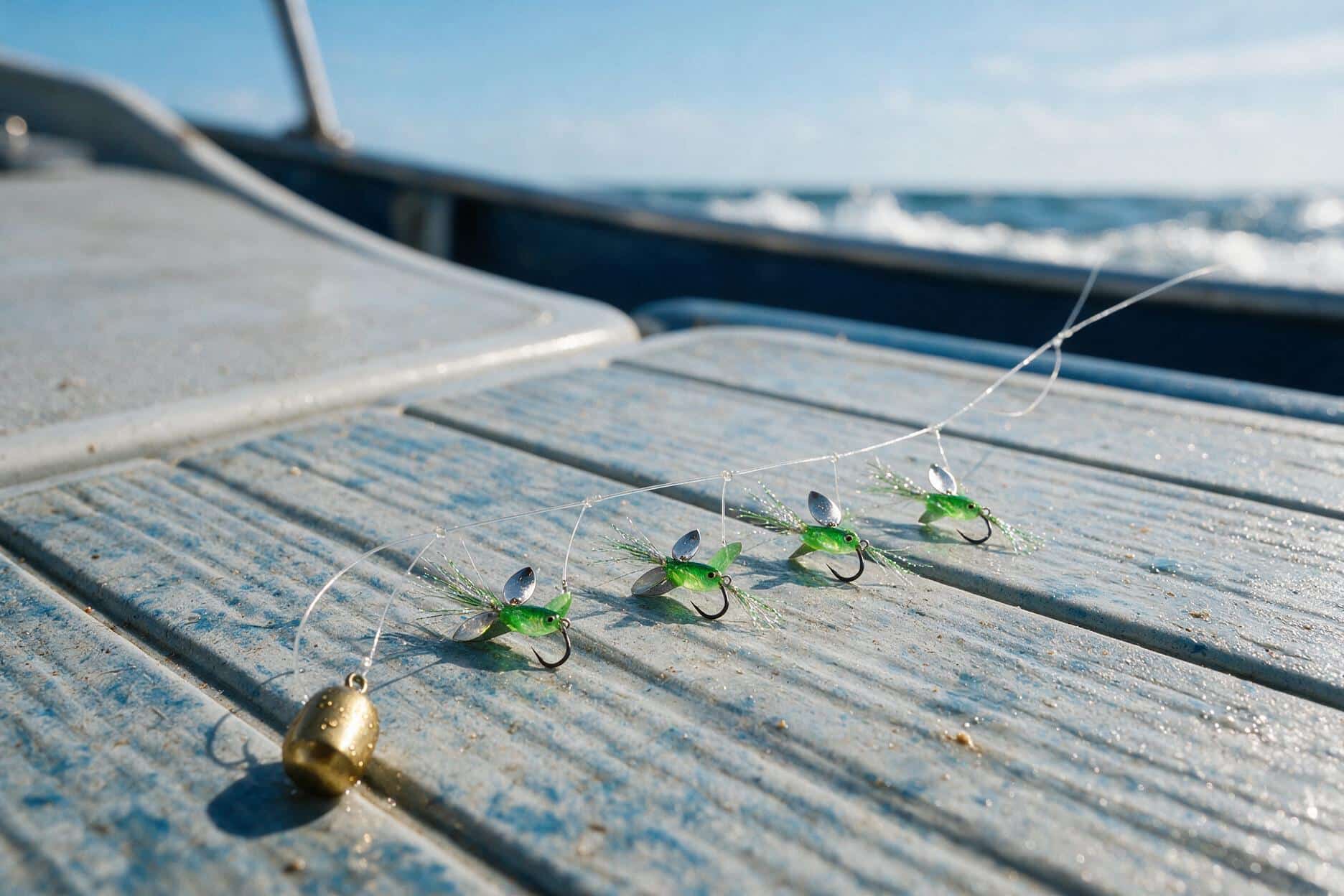
what a sabiki rig actually is
A sabiki rig comes pre-tied in most cases, a leader with anywhere from three to eight short dropper lines branching off it, each ending in a tiny hook rigged with a sliver of flash, feather, or skin. A small weight goes below the whole rig to get it down into a bait school. Fish rarely bite these hooks out of hunger, they strike out of the same reflex that makes a school of baitfish react to a flash of movement nearby.
how to fish it
Drop the rig straight down through a school of baitfish, visible on electronics or just showing on the surface around structure, docks, and lights at night being reliable spots. Jig it gently with short twitches rather than a full sweeping motion, small movement is what triggers the reaction strike, big sweeps just pull the rig through the school without giving fish time to react.
It’s common to hook multiple baitfish at once since several hooks are working the water column simultaneously. Reel up steadily once you feel weight rather than yanking, multiple small hooks in a school of soft-mouthed baitfish pull free easily if you horse it.
sizing the rig to your bait
Sabiki rigs come in different hook sizes for different bait species, size 6 to 10 hooks for small baits like anchovies and small sardines, size 2 to 4 for larger baitfish like bigger sardines or small mackerel. Using hooks too large for the bait you’re marking on electronics means fewer hookups even when fish are thick around the rig.
line and terminal setup
Light fishing line, typically 6 to 15 pound test, matches the light spinning tackle sabiki fishing usually calls for, heavier line makes the already-small hooks harder to present naturally and can spook bait schools that are more line-shy than gamefish. Tie the rig to your main line with a uni knot or another reliable knot from the same fishing knots toolkit, and add a small weight below the rig, 1 to 4 ounces depending on depth and current.
where to fish it
Sabiki rigs earn their keep around piers, jetties, marina docks, and anywhere baitfish stack up near structure or light. Saltwater and brackish water are the most common settings, though freshwater anglers use scaled-down versions for shad and other small baitfish on some reservoirs. Look for surface nervous water, diving birds, or marks on electronics stacked in a tight vertical band before dropping the rig.
from bait well to hook
Once you’ve caught bait on the sabiki, transfer it to a livewell quickly, baitfish caught on multiple small hooks stress and die faster than bait caught by hand or cast net. Handle them as little as possible and keep the livewell aerated, dead bait on a sabiki hook rarely produces the same results as lively bait.
keeping a rig ready to go
Sabiki hooks are fine wire and tangle easily once wound loose in a tackle box. Wind each rig back onto its original cardboard holder or a rig-specific winder after use rather than balling it up, a tangled sabiki costs more time to untangle streamside than it would take to just tie on a fresh one. Carry two or three pre-rigged, they’re inexpensive enough that losing one to a snag on structure isn’t worth fighting over.
mistakes anglers make with a sabiki rig
Jigging too aggressively is the most common one, treating it like a jigging spoon for gamefish rather than a subtle reaction bait for schooling fish that spook easily from big, unnatural movement. Keep the motion small.
The other mistake is leaving the rig in the water too long once you’ve got enough bait, the constant hook exposure and the commotion of fighting multiple fish at once tends to push the rest of the school down or away, cutting into everyone’s bite window right after.
sabiki rig FAQ
How many hooks does a sabiki rig need? Most pre-tied rigs run 6 hooks, which balances catching enough bait against a rig that gets tangled or unmanageable with too many at once.
Can you catch gamefish on a sabiki rig? Occasionally, small gamefish will strike the flash, but the hooks and leader are far too light to intentionally target anything beyond bait-sized fish.
What’s the best time of day for sabiki fishing? Early morning and around lights at night are the most consistent windows, both times baitfish school tight and shallow enough for a sabiki to reach them easily.
Can sabiki rigs be used from shore? Yes, piers and jetties are some of the most productive sabiki spots since bait schools stack tight against structure, no boat required.