The first time I fished a real fishing pier, the kind that stretches out well past the breakers, I hooked into something big enough to bend my rod into a shape I didn’t like, and I had no idea what to do next because everything I knew about landing a fish assumed I was standing at water level, not twenty feet above it. A guy fishing a rod over from me pointed at a drop net hanging off a nail near the railing and said, use that. I did, clumsily, and kept the fish. That gap between what works from a boat or the beach and what works on a pier is basically this whole guide.
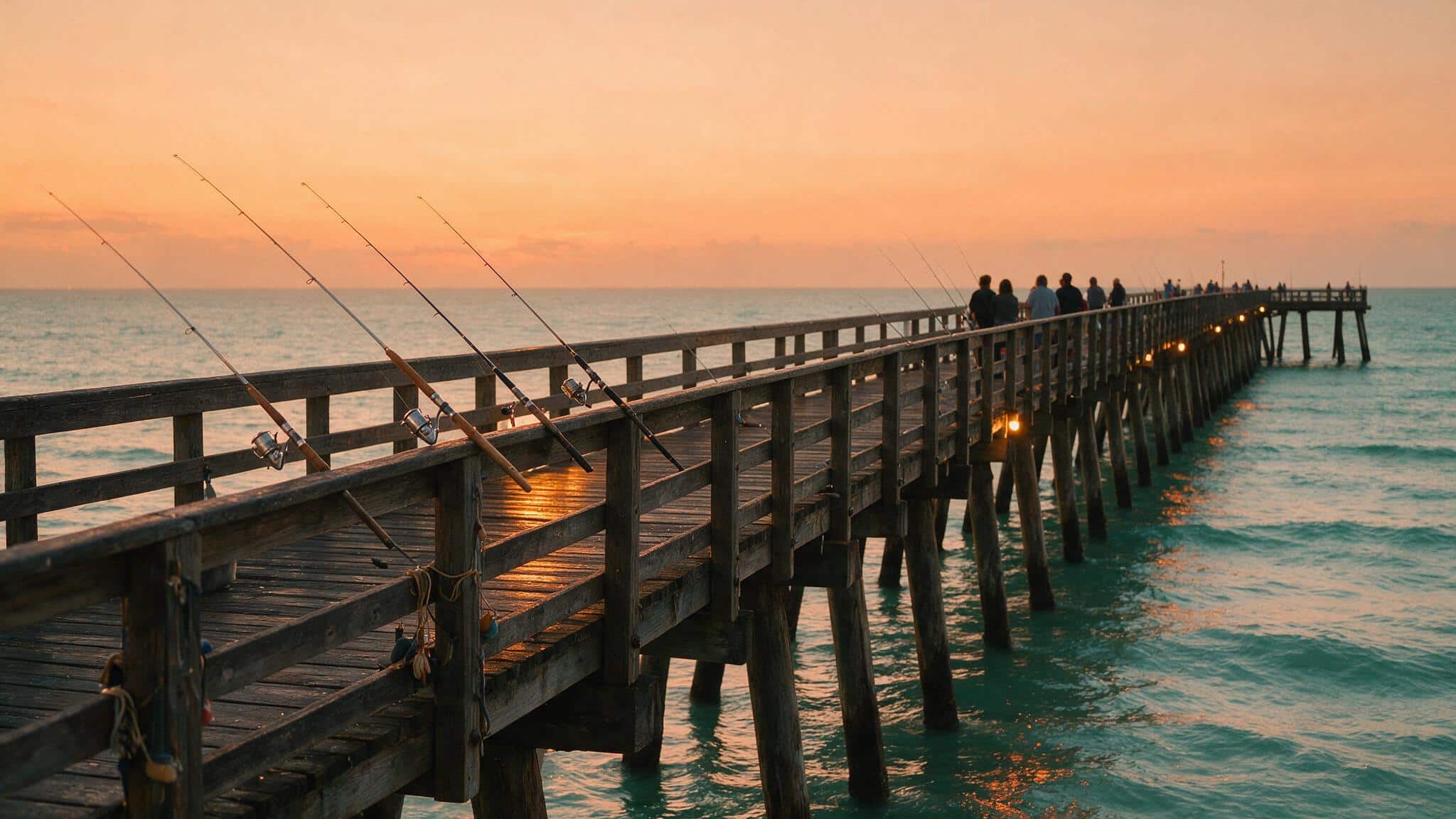
A fishing pier is one of the most underrated ways to get into saltwater fishing. You don’t need a boat, you don’t need to wade into surf, and most piers charge a small day fee or nothing at all. You’re fishing from a fixed platform that puts you well beyond the wave break, over water a shore angler could never reach with a cast.
why piers are a good starting point
A fishing pier removes a lot of the intimidation factor that keeps people away from saltwater fishing. There’s almost always someone else around who can point you toward what’s biting, the footing is solid and flat compared to wading in surf, and you can bring kids or beginners without worrying about them getting knocked down by a wave. I’ve met more people willing to give advice on a pier than anywhere else I fish, which says something about the culture piers tend to build.
gear differences from surf or boat fishing
Fishing from twenty or thirty feet above the water changes what you need. A standard surf outfit or boat rod still works for casting and fighting fish, but landing anything worthwhile means either walking it down to a lower platform if the pier has one, or using a pier net, also called a drop net, on a long rope to haul the fish up. Most piers with any fishing traffic keep a few community drop nets tied near the rails, but bringing your own means you’re never stuck waiting on someone else to finish with theirs.
Line and leader also skew heavier than beach fishing because you’re often fishing around pilings, which are covered in barnacles and will shred light line in seconds once a fish wraps around one. I run heavier fluorocarbon leaders off a pier than I would standing on the sand for that exact reason.
where to stand on the pier
The end of the pier usually gets the most attention because it reaches the deepest water and often the best current flow, which is where bigger fish and open-water species tend to show up. The pilings along the sides hold a different crowd of fish entirely, since they act like a reef, collecting barnacles, small crabs, and baitfish that draw in anything hunting them.
Fishing tight to the pilings with a light jig or live bait rig can outproduce the crowded end of the pier, especially on days when everyone’s casting straight out and nobody’s working the structure right under their feet. I split my time between both depending on how crowded the end gets.
bait and rigs that work from a pier
Live bait wins on piers more often than not, since you’re usually fishing over structure that holds real forage. Live shrimp, finger mullet, and small pinfish cover most situations. A basic knocker rig or a Carolina rig with a fish finder setup lets bait sit near bottom or drift naturally depending on the current, and a simple float rig keeps bait suspended over structure without dragging bottom and snagging.
Keep a few extra rigs pre-tied before you go. Pier fishing chews through terminal tackle fast between piling snags and the sheer number of fish that can be around, and re-tying a rig while everyone around you is hooked up is a good way to miss the bite entirely.
pier etiquette that keeps everyone happy
Piers are shared, narrow spaces, and a little courtesy goes a long way. Keep your rod tip up and your line tight to your own space rather than letting it drift into your neighbor’s lane. Announce it loudly when you’re bringing a bigger fish up so people can clear a path, and help net or gaff someone else’s fish if they ask, since you’ll want the same favor eventually. Pack out your bait bags and cut line; hooks and mono left on the deck cause real problems for the next angler and for birds.
staying safe on a pier
Pier fishing feels safer than wading in surf, and mostly it is, but a few real risks are worth naming. Wet, salt-crusted boards get slippery fast, so watch your footing, especially carrying a rod and a bucket at the same time. Hooks flying during a cast are a real hazard on a crowded pier, so look behind and around you before you cast, not just in front. If you’re fishing with kids, keep them away from the rail edge and away from anyone actively fighting a fish, since a hooked fish can pull hard enough to yank gear out of unprepared hands. None of this should keep you off a pier. It’s just the same basic awareness that applies anywhere people are casting hooks near open water.
piers and the surf connection
A lot of pier fishing overlaps directly with beach fishing, since the water on either side of most piers behaves like any other stretch of coastline, just with structure added. If you want the fuller picture of reading tides, currents, and beach features, our guide to surf fishing covers the fundamentals that apply just as much whether you’re standing on sand or thirty feet above it on a fishing pier.