Crankbait fishing lures cover more water, in less time, than almost any other bait in a tackle box. Cast, reel, repeat, and the bait does the work of searching out active fish across a flat, a point, or a stretch of channel bank. That simplicity is deceptive, though. Diving depth, bill design, and retrieve speed all matter more with crankbaits than with most other lure types, and getting one of those wrong means the bait never gets in front of the fish at all. This guide covers how crankbaits work, the main styles worth owning, and how to fish them so they actually reach the strike zone.
how crankbait fishing lures actually work
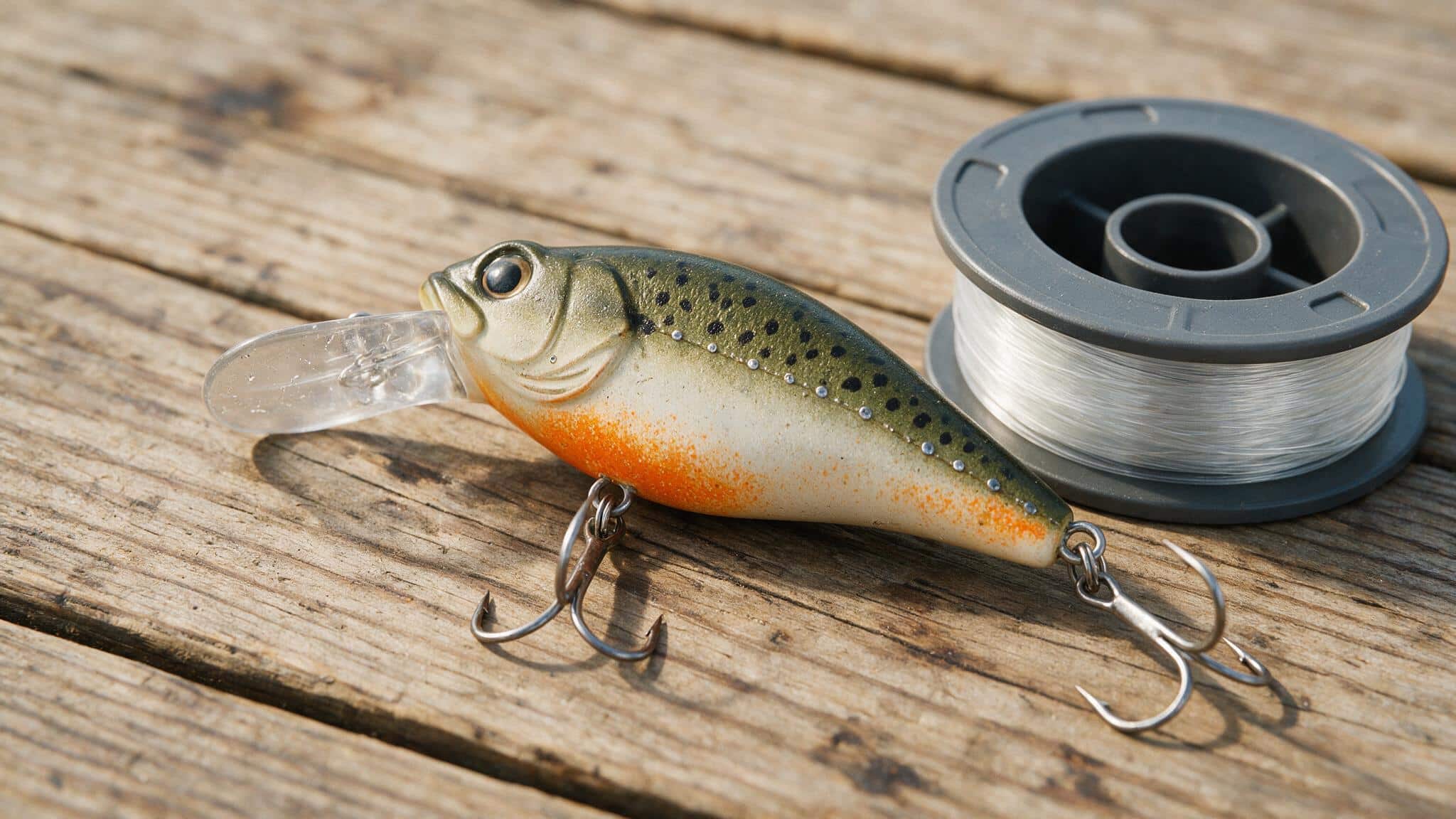
A crankbait dives based on the size, angle, and length of its bill, also called a lip. A longer, more angled bill pushes the bait deeper on the same retrieve speed, while a short, stubby bill keeps the lure shallow and lets it deflect off cover without diving hard into it. Buoyancy plays a role too. Most crankbaits float at rest and dive on the retrieve, which means pausing the bait lets it rise back up, a trick that draws strikes from fish following but not committing. Body shape controls the wobble. A wide, rounded body rolls side to side more aggressively, while a slimmer body has a tighter, faster wiggle that reads as more natural at higher speeds.
the main styles worth owning
Crankbait fishing lures fall into a few broad styles, each built for a different part of the water column. Squarebill crankbaits run shallow, usually two to six feet, and their flat-faced bill is built to bounce off rock, wood, and stumps without hanging up constantly, which makes them a good choice for skipping past shallow cover. Round-bill and deep-diving crankbaits reach anywhere from eight to twenty feet depending on the model, useful for fishing river channels, deep points, and offshore structure where fish hold well below the surface. Lipless crankbaits skip the bill entirely and rely on a flat, thin body that vibrates on a straight retrieve. They sink on the pause instead of floating, which makes them useful for fishing through grass with a rip-and-fall technique. Jerkbaits are close cousins of crankbaits, usually suspending or slow-rising, and they get worked with sharp twitches and long pauses rather than a steady crank.
matching diving depth to the water column
The most common crankbait mistake is fishing a bait that never reaches the depth where the fish actually are. If bass are holding at twelve feet and the crankbait only dives to six, it does not matter how good the retrieve looks, the bait is fishing six feet above every fish in the area. Checking a manufacturer’s stated diving depth before tying one on saves a lot of wasted casts, and it is worth owning at least two or three depth ranges so you are not stuck guessing. Line diameter affects depth too. Thinner line lets a crankbait dive deeper on the same retrieve because it cuts through the water with less resistance, part of why serious crankbait anglers often fish lighter fluorocarbon than they would for other techniques.
retrieve techniques that get bites
A steady, moderate retrieve is the default and it catches plenty of fish on its own, but a stop-and-go retrieve, cranking a few turns and pausing, often outproduces it, especially in cooler water when fish are less willing to chase something moving at a constant speed. Deflection matters more than most anglers realize. Actively aiming a crankbait to bump a stump, a rock, or a dock post and pausing right after contact triggers reaction strikes that a clean retrieve through open water rarely produces. Lipless crankbaits respond well to a rip-and-fall retrieve through grass, ripping the bait free of vegetation and letting it flutter down on a slack line, which is when most strikes happen.
gear, line, and one knot mistake to avoid
Crankbait fishing lures work best on a rod with some parabolic bend through the middle and tip, not a fast, stiff blank built for hard hooksets. A softer rod keeps a fish pinned on the treble hooks during a fight instead of ripping them free on head shakes, since crankbait hooks have less bite than a single worm hook. Fluorocarbon in the ten to fourteen pound range is the standard choice for most crankbait applications. One mistake worth calling out specifically: tying a crankbait on with a knot cinched tight against the split ring or eye, like a heavily snugged palomar knot, can choke down the bait’s action and kill the wobble that makes it work in the first place. Our fishing knots guide covers this in more detail and which knots preserve action instead of restricting it. For how crankbaits fit alongside the other major bass lure categories, see our bass fishing lures guide.
Crankbait fishing lures reward anglers who pay attention to depth and cover instead of just casting and reeling on autopilot. Match the bill to the water column, bounce it off something solid whenever you can, and do not choke the knot down on the eye. Get that much right and most of what goes wrong with crankbait fishing takes care of itself.