Bad storage breaks more rods than bad fishing ever does. A blank that survives years of hard casting and hooksets can end up with a permanent bend from nothing more dramatic than leaning in the wrong corner of a garage for a few months. It’s a boring cause of damage, which is probably why it doesn’t get talked about as much as the exciting kind.
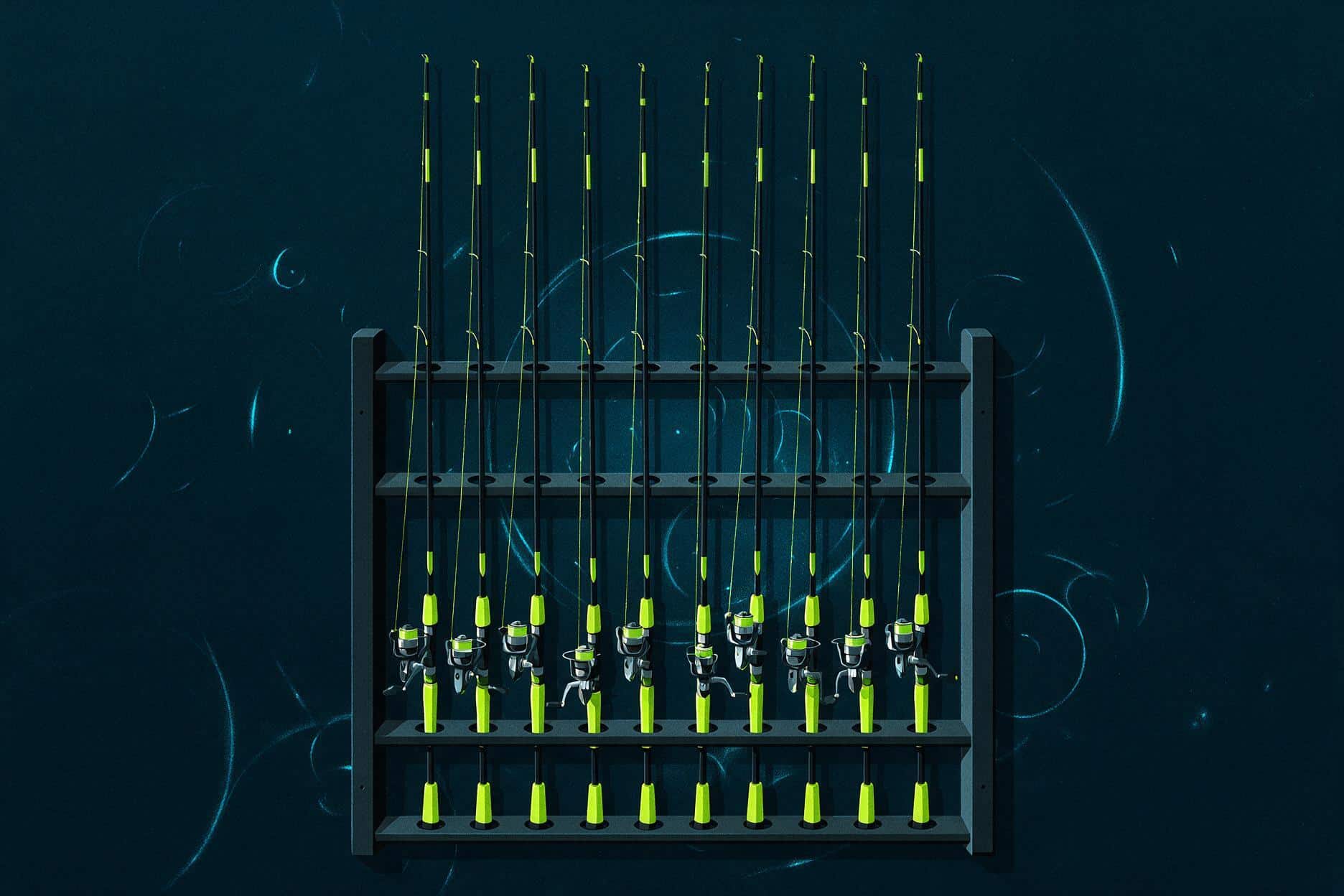
vertical beats horizontal for anything long-term
Storing rods vertically, butt down in a rack with the tip pointing up, keeps the blank’s own weight from working against it over time. Horizontal storage isn’t automatically bad, but it needs full support along the length of the blank, not just two contact points. A rod resting on a couple of wall pegs with open space in between will slowly develop a sag in the middle over a season of storage, the same way a shelf bows under weight it wasn’t braced for. If you’re storing horizontally, use a rack designed to support the blank continuously, or accept that it’s a short-term solution rather than a season-long one.
the corner-leaning mistake
Leaning a rod in the corner of a garage, propped against two walls at an angle, is probably the single most common way a blank ends up with a permanent curve. Gravity plus months of time plus an unsupported span is a slow, quiet way to bend graphite, and heat makes it worse. A garage that gets hot in summer softens the resin in the blank just enough that whatever curve it’s been holding starts to set in as the new normal shape. By the time you notice the rod doesn’t cast straight anymore, the bend has been building for months, not days.
reels on or off for storage
For a rod you’re fishing weekly, leaving the reel attached is fine, nothing about short gaps between trips causes real damage. For anything going into off-season storage for months, back the drag off completely first, whether or not the reel stays on the rod. A drag left cranked down all winter keeps constant pressure on the washers the whole time, and that sustained compression can leave them slipping or performing unevenly once you finally load it back up in spring. It costs nothing and takes five seconds, and it’s one of the more commonly skipped steps on this whole list.
sleeves, tubes, and rod lockers
Individual rod sleeves or a hard travel tube are worth the small cost if you’re transporting rods regularly, since bare rods rattling around loose in a truck bed or rod locker tangle guides and crack against each other at the tips. I learned this one the expensive way, a rod tip sticking a few inches out of a truck bed, a closed tailgate, and a very short rod afterward. Every rod I travel with now goes in a sleeve or a tube, no exceptions, and that one habit has saved me more tips than I want to admit.
the mistake that quietly ruins blanks over years
Heat exposure during storage. A rod left in a hot truck bed or car trunk through a summer isn’t getting damaged in any way you can see immediately, but the resin holding the blank’s graphite or fiberglass layers together breaks down gradually under repeated heat cycling. That slow degradation does more real damage over a few summers than years of normal fishing use, and it’s completely invisible until the blank fails under a load it should have handled easily. Store rods somewhere temperature-stable: a climate-controlled room, not a garage attic in July or a car trunk during a heat wave.
None of this is complicated, and none of it costs much. A vertical rack, a few seconds backing off the drag before winter, and keeping rods out of extreme heat prevents most of the damage that has nothing to do with how carefully you actually fish. For the repairs worth knowing when damage happens anyway, fixing guides and broken tips covers the hardware side, and the reel maintenance checklist rounds out the rest of the gear that needs the same kind of unglamorous, regular attention.
Store fishing rods so they don’t develop a permanent bend or damaged drag, using vertical racks, proper drag care, protective sleeves, and heat-safe storage.
Store rods vertically
Use a rack that holds rods butt-down with the tip pointing up so the blank’s own weight doesn’t work against it; if storing horizontally, use continuous support along the length, not just two contact points.
Avoid corner-leaning
Don’t lean rods propped at an angle in a garage corner; gravity plus months of time plus an unsupported span slowly bends the blank into a permanent curve, and heat makes it worse.
Back off the drag for long-term storage
Before off-season storage, loosen the drag completely whether or not the reel stays on the rod, so the washers don’t stay compressed for months and end up slipping or performing unevenly.
Use sleeves or tubes for transport
Protect rods with individual sleeves or a hard travel tube when transporting them so bare rods don’t rattle loose, tangle guides, or crack against each other at the tips.
Keep rods away from heat
Store rods somewhere temperature-stable, not a hot garage attic or a car trunk, since repeated heat cycling gradually breaks down the resin holding the blank’s layers together.
Is it okay to store a fishing rod horizontally?
Only with full continuous support along the length of the blank. A rod resting on just two contact points, like a couple of wall pegs, will slowly develop a sag in the middle over a season of storage.
Should I leave the reel attached during storage?
It’s fine for a rod you’re fishing weekly. For anything going into off-season storage for months, back the drag off completely first, whether or not the reel stays on the rod.
Why do fishing rods develop a permanent bend?
Usually from being leaned in a corner under their own weight for months. Gravity plus time plus an unsupported span slowly bends graphite, and heat in a garage makes the curve set in faster.
Does heat really damage a fishing rod?
Yes, repeated heat cycling in a hot garage attic or car trunk gradually breaks down the resin binding the blank’s graphite or fiberglass layers together, weakening it invisibly until it fails under a load it should have handled easily.