A walleye spinner rig is a leader strung with beads and a spinning blade ahead of one or two hooks, trolled slow and usually kept near bottom with a bouncer weight. It’s the setup that takes over my boat once the water warms past the early-season jig bite, and it’s simple enough to build yourself once you understand what each part is actually doing.
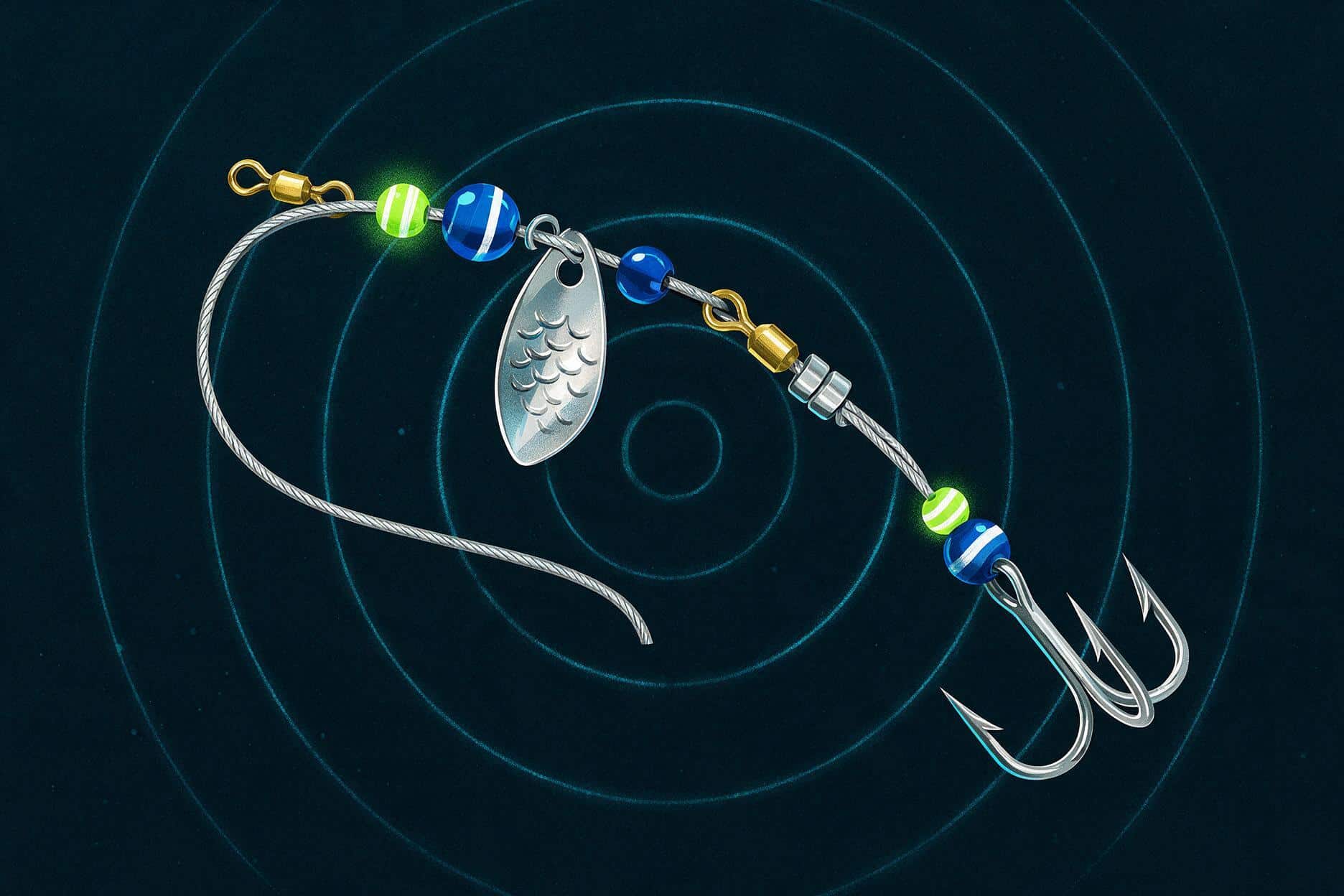
what a walleye spinner rig actually is
The core pieces are a leader of fluorocarbon or mono, a string of colored beads, a spinning blade in a Colorado, Indiana, or willow shape, and a hook at the business end, often tied on with a snell knot rather than a standard eye knot. The blade spins as the rig moves through the water, throwing flash and vibration that a plain hook and bait can’t produce on its own. Most anglers pair the harness with a bottom bouncer, a weighted wire arm that lets the rig ride just off bottom without the weight itself snagging every rock and log down there.
Bait matters as much as the hardware. A live nightcrawler threaded on the hook, or a soft plastic trailer if you’d rather not deal with bait, gives the blade something to work in front of. Without a trailer, you’ve just got a spinning piece of metal that fish will look at and ignore.
how to fish a spinner rig
Speed is the whole game. Somewhere between 0.7 and 1.2 miles per hour is the range where most spinner blades turn properly without overspinning, and going faster than that turns a subtle presentation into a blur that walleye tend to avoid rather than chase. Let out enough line behind the boat that the bottom bouncer taps bottom every few seconds, a light tick you feel more than see on the rod tip. Too little line and the weight drags. Too much and you lose contact with bottom entirely and might as well not be using a bouncer.
Blade choice tracks water clarity more than anything else. In stained or muddy water I go bigger and brighter, gold or chartreuse blades that push more vibration and flash. In clear water I drop down to smaller, more natural colors, since a big flashy blade in gin-clear conditions tends to spook fish rather than draw them in.
building your own versus buying pre-made
Pre-tied harnesses from the tackle shop work fine and save time if you’re headed out the next morning. But once you start snelling your own hooks and building harnesses over the winter, the cost per rig drops fast, and you get to match hook size and leader length to the exact bait and lake you’re fishing instead of whatever a factory decided was average. I build a batch every winter and keep them in labeled binder sleeves by blade color and hook size, so picking one on the water takes ten seconds instead of digging through a tangled bag.
the mistake anglers make with spinner rigs
Trolling too fast. It’s the single most common way a spinner rig stops producing, and it’s an easy trap to fall into because a little extra speed makes the blade spin harder and feels like it should mean more attraction. It doesn’t. Past the right speed range, the blade spins so fast the whole presentation looks unnatural, and walleye are not aggressive enough chasers to keep hammering a bait moving like that.
The second mistake is skipping a quality ball-bearing swivel between the spinning blade and the rest of the leader. Without one, the blade’s rotation twists the entire line above it over the course of a troll, and by the third or fourth fish you’re fighting a rig with a memory coil instead of a straight leader. A good swivel isolates the spin to the blade section and saves you from re-rigging constantly.
The third mistake is running a bouncer that’s the wrong weight for your depth and speed. Too light and you never feel bottom, so you’re fishing blind above where the fish actually are. Too heavy and you’re snagging every piece of structure on the lake floor. Match the bouncer weight to your depth, roughly an ounce of weight per ten feet of water as a starting point, and adjust from there based on how much line angle you’re seeing off the rod tip.
Spinner rigs reward patience more than most walleye presentations. Slow the boat down before you change anything else, and check that swivel before you blame the blade. For the rest of the setups worth having ready before a trip, the complete guide to fishing rigs covers where this one fits next to the others.