A snell knot attaches a hook by wrapping the leader around the shank instead of just cinching down on the eye, and it’s the one I reach for anytime I’m rigging bait on a hook with a turned-up or ringed eye. Catfish rigs, sabiki droppers, live-bait panfish hooks, anything where a straight, hard pull matters more than a fast tie.
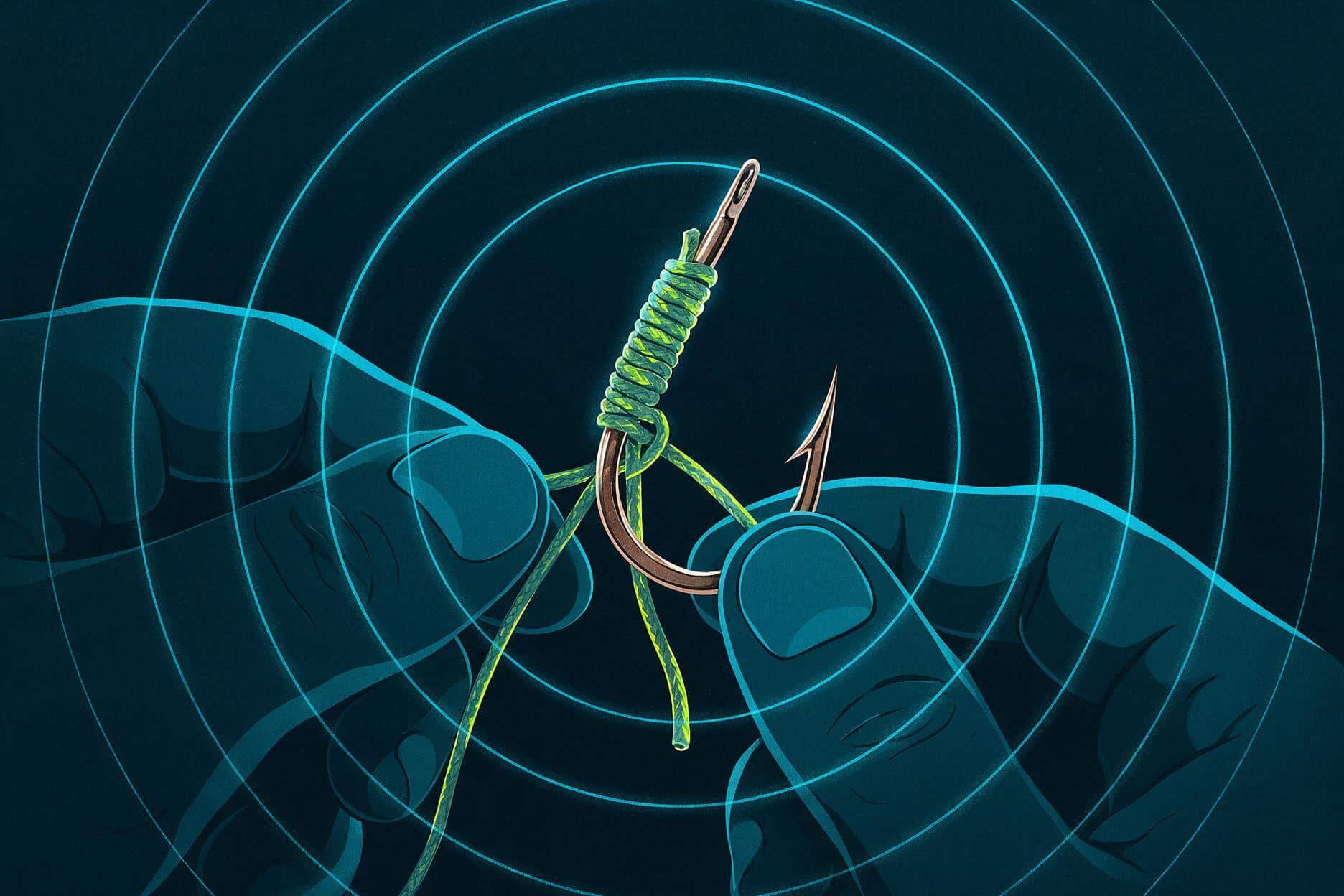
what makes a snell different from an eye knot
Most knots, a Palomar or a clinch, tie through the eye and pull in line with the leader. A snell wraps down the hook shank, so the pull comes through closer to the hook point itself instead of at an angle through the eye. On a circle hook or an octopus-style bait hook, that changes how the hook rotates into a fish’s jaw during the set, and it’s a real difference, not a cosmetic one. It’s also why snelled hooks show up constantly on rigs built for bait fishing rather than casting lures, including a catfish rig and a sabiki rig strung with multiple dropper hooks.
There’s a practical side too. Snelled hooks can be tied ahead of time in bulk and carried ready to fish. I tie a dozen the night before a catfish trip and keep them in an old tin in the tackle box. At five in the morning with cold, wet hands, swapping a pre-snelled hook onto a rig beats tying any knot from scratch.
how to tie a snell knot, step by step
- Thread six to eight inches of leader through the hook eye from the point side, so the tag end comes out on the same side as the hook point.
- Lay the tag end alongside the shank, forming a loop that runs from the eye down toward the bend.
- Wrap the tag end around both the shank and the standing line, five to seven turns, working down toward the bend as you go.
- Hold the wraps in place with your fingers and pull the standing line, not the tag end, to start drawing the wraps snug against the shank.
- Wet the wraps, then pull the standing line firmly while pinching the wraps until they compress tight and even against the shank.
- Trim the tag end close to the last wrap.
the mistake that ruins a snell knot
Wrapping up toward the eye instead of down toward the bend. It feels like it shouldn’t matter, and it changes everything, because it reverses the angle the hook pulls at when a fish takes it. If your snelled hooks aren’t rotating and setting the way they should, check which direction the wraps run before you blame the hook.
The second mistake is uneven pressure while cinching. Pull the tag end instead of the standing line, or pull too fast without wetting the wraps first, and the coils bunch up instead of lying flat and even down the shank. A bunched snell is weaker and bulkier, and it looks wrong even before you load it up. Take the extra few seconds to wet it and pull slow.
The third mistake is using a snell on an eye that’s too small for two passes of leader. Heavier bait leader through a small live-bait hook eye gets crowded fast, and the knot ends up stacked on itself instead of wrapped cleanly. Match your leader diameter to the eye size, or go up a hook size if you’re fishing heavier leader than the hook was built for.
snell knot versus a palomar or clinch
For lures and jigs tied straight to the leader, I still default to a Palomar knot. It’s faster, it’s plenty strong, and there’s no shank to wrap because the hook is usually built into the lure. The snell earns its keep specifically on bait hooks where the shank-wrap advantage on the hookset is worth the extra thirty seconds it takes to tie.
I don’t think one knot beats the other in general. They’re built for different jobs. A drawer full of pre-tied snelled hooks next to a spool of leader for quick Palomar knots on lures covers most of what shows up on a normal weekend, and that combination has worked for me longer than I’ve kept track of.
Tie a few snelled hooks before your next bait trip instead of mid-cast at the water, and re-rigging after a bite-off or a break stops being the thing that costs you fishing time. For the rest of the connections worth knowing before you head out, the complete fishing knots guide has the full list.
How to snell a hook: wrapping the leader down the shank instead of tying through the eye, for bait rigs like catfish rigs, sabiki droppers, and live-bait panfish hooks.
Thread the leader through the eye
Thread 6 to 8 inches of leader through the hook eye from the point side, so the tag end comes out on the same side as the hook point.
Form the loop along the shank
Lay the tag end alongside the shank to form a loop running from the eye down toward the bend.
Wrap down toward the bend
Wrap the tag end around both the shank and the standing line 5 to 7 turns, working down toward the bend, not up toward the eye.
Snug the wraps against the shank
Hold the wraps in place with your fingers and pull the standing line, not the tag end, to start drawing the wraps snug against the shank.
Wet, cinch, and trim
Wet the wraps, then pull the standing line firmly while pinching the wraps until they compress tight and even against the shank, then trim the tag end close to the last wrap.
Why does the wrap direction matter on a snell knot?
Wrapping down toward the bend instead of up toward the eye changes the angle the hook pulls at when a fish takes it, which affects how the hook rotates and sets in the jaw. Wrap it the wrong way and you lose that advantage, even though the knot itself still looks and holds fine.
When should I use a snell knot instead of a Palomar knot?
Reach for a snell on bait hooks with a turned-up or ringed eye, like catfish rigs, sabiki droppers, and live-bait panfish hooks, where the shank wrap changes how the hook rotates on the set. For lures and jigs tied straight to the leader, a Palomar knot is faster and just as strong, with no shank to wrap in the first place.
Can snelled hooks be tied ahead of time and stored?
Yes, that is one of the main advantages of snelling. Tie a batch the night before a trip and keep them ready in a tackle box, so swapping on a fresh hook at the water is as fast as tying on a loop instead of a full knot from scratch with cold, wet hands.
What’s the most common mistake when tying a snell knot?
Wrapping up toward the eye instead of down toward the bend, which reverses the hook’s pull angle and undoes the main advantage of snelling. Close behind that is cinching unevenly, pulling the tag end instead of the standing line, or skipping the wet-down before pulling tight, which leaves the coils bunched instead of lying flat down the shank.