Finding a good fishing pond is less about luck than most beginners assume. I spent my first two years driving past a dozen ponds within fifteen minutes of my house because none of them looked promising from the road, and then a coworker mentioned the retention pond behind his subdivision had bluegill the size of your palm. It had been sitting there the whole time.
why a fishing pond is worth your time
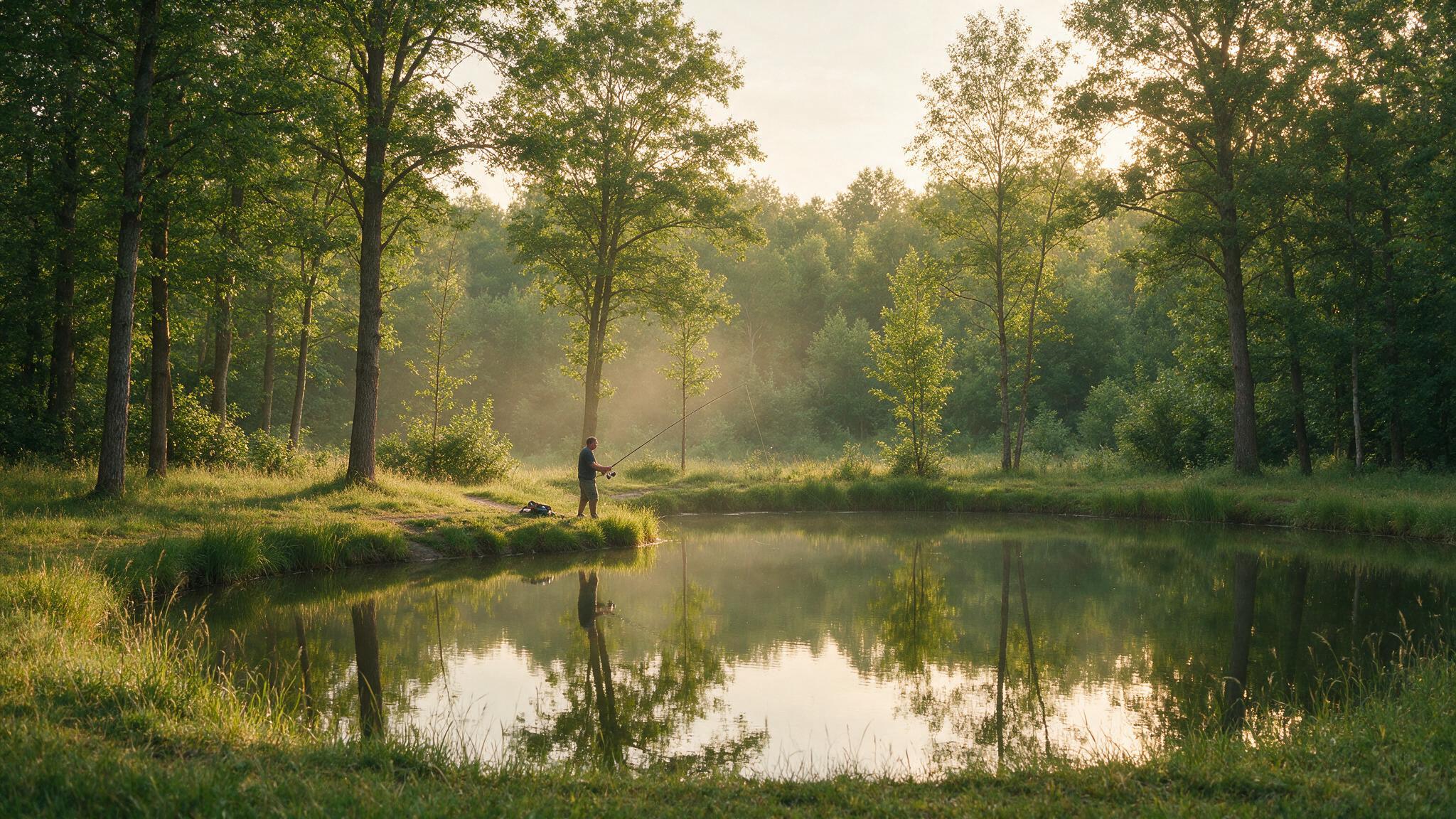
A fishing pond will never match a big reservoir for record-book fish, but it wins on almost everything else that actually matters for a normal afternoon. You can fish one in an hour without towing a boat anywhere, the fish tend to be less pressured than anything on a public lake, and a small pond teaches you to read water fast because there is so much less of it to search. Most anglers who eventually move on to lakes and rivers cut their teeth on a fishing pond first, whether they realize it or not. The skills transfer directly. Learning to spot a drop-off, a laydown, or a shaded bank on two acres of water sets you up to find the same features on two hundred acres later.
types of ponds you’ll come across
Not every fishing pond is the same animal. Farm ponds, usually dug for irrigation or livestock, often hold bass, bluegill, and catfish in a fairly balanced population and get very little fishing pressure. Stormwater and retention ponds in subdivisions and office parks get overlooked constantly because they look artificial, but plenty of them get stocked by local wildlife agencies or simply build a population from runoff-connected creeks over the years. Golf course ponds hold fish too, though access usually depends on the course’s own policy, and you should never assume you can walk on and fish one uninvited. State-managed community fishing ponds exist specifically for public access, often stocked seasonally with catfish or trout, and are usually the easiest fishing pond option for anyone without a personal connection to private land.
finding a public fishing pond
Most state wildlife or fish and game agencies maintain an online list of community fishing ponds open to the public, frequently searchable by county or zip code. These lists exist because a lot of states run put-and-take stocking programs aimed at kids and beginners, so the ponds on them are usually a safe bet for consistent action even if the fish rarely get large. City and county parks departments are a second source worth checking, since plenty of small ponds inside public parks never make it onto a state fishing list but are completely legal to fish with a normal license. A quick search plus a phone call to confirm access rules beats driving out to a pond only to find it posted as off limits.
getting permission on private water
A huge number of the best ponds around are on private property, and getting access is often as simple as knocking on a door and asking politely. Go outside of peak season if you can, be specific about when you would like to fish and for how long, and offer to share your name and number in case anything comes up. Most landowners have been asked before and have a quick yes or no ready. A polite no is still useful information, since it means you can cross that fishing pond off your list and move on instead of wondering for months whether you should try again.
what species to expect
Largemouth bass and bluegill are the backbone of most warm water ponds, and where you find one you usually find both, since bluegill are a primary forage fish for pond bass. Catfish show up in stocked ponds constantly, especially channel cats, which tolerate the lower oxygen levels a small, still fishing pond sometimes has during a hot summer. Crappie appear less often in small ponds than in lakes, since they generally need more open water and deeper structure than most ponds provide. If bass specifically are your target, our bass fishing pond guide goes deep into tactics for that exact situation.
what size fish to actually expect
Set your expectations by the pond’s history, not by what you saw on someone’s social media post. A fishing pond that gets fished hard and never sees a fish released back tends to stay small and skinny. A pond that has been left alone for years, especially a private one, can produce genuine surprises since the population never gets thinned out. Ask around before you go if you can. Local tackle shops usually know which nearby ponds are producing and which ones have been fished out for the season.
gear that covers most pond situations
You rarely need more than a single medium spinning or baitcasting combo for pond fishing. A handful of soft plastics, a spinnerbait, and a topwater bait for morning and evening covers bass. For bluegill and catfish, a simple bobber rig with worms or chicken liver works about as well as anything more complicated. Compare pond structure and seasonal patterns to bigger water in our lake fishing guide, since a lot of the same logic scales down to a smaller fishing pond without much adjustment.
rules and etiquette worth knowing
Check whether a specific fishing pond requires a state license even on private land, since rules vary and some private ponds are exempt while others are not. Pack out everything you bring in, including line and bait containers, since a pond with visible trash is often the reason access gets revoked for everyone. If a pond is stocked and has posted catch limits, respect them even if nobody is around to check. Access to a good fishing pond is a privilege that a handful of careless anglers can end for everyone else nearby.
A fishing pond rarely gets the attention it deserves, mostly because it doesn’t look like much from a car window. Spend an afternoon walking the bank of one near you, ask a few questions if it sits on private land, and pay attention to what you find. Most people who take pond fishing seriously end up with two or three go-to spots within a short drive, and that is usually enough.