The lake I learned to fish on was a flooded quarry behind my grandfather’s property, maybe fifteen acres, ringed with old fence posts that used to mark pasture before the water came up. I didn’t know it then, but that lake taught me almost everything I still use today: how structure holds fish, how temperature changes everything through the season, and how a small, unglamorous piece of water can outfish places ten times its size if you understand it.
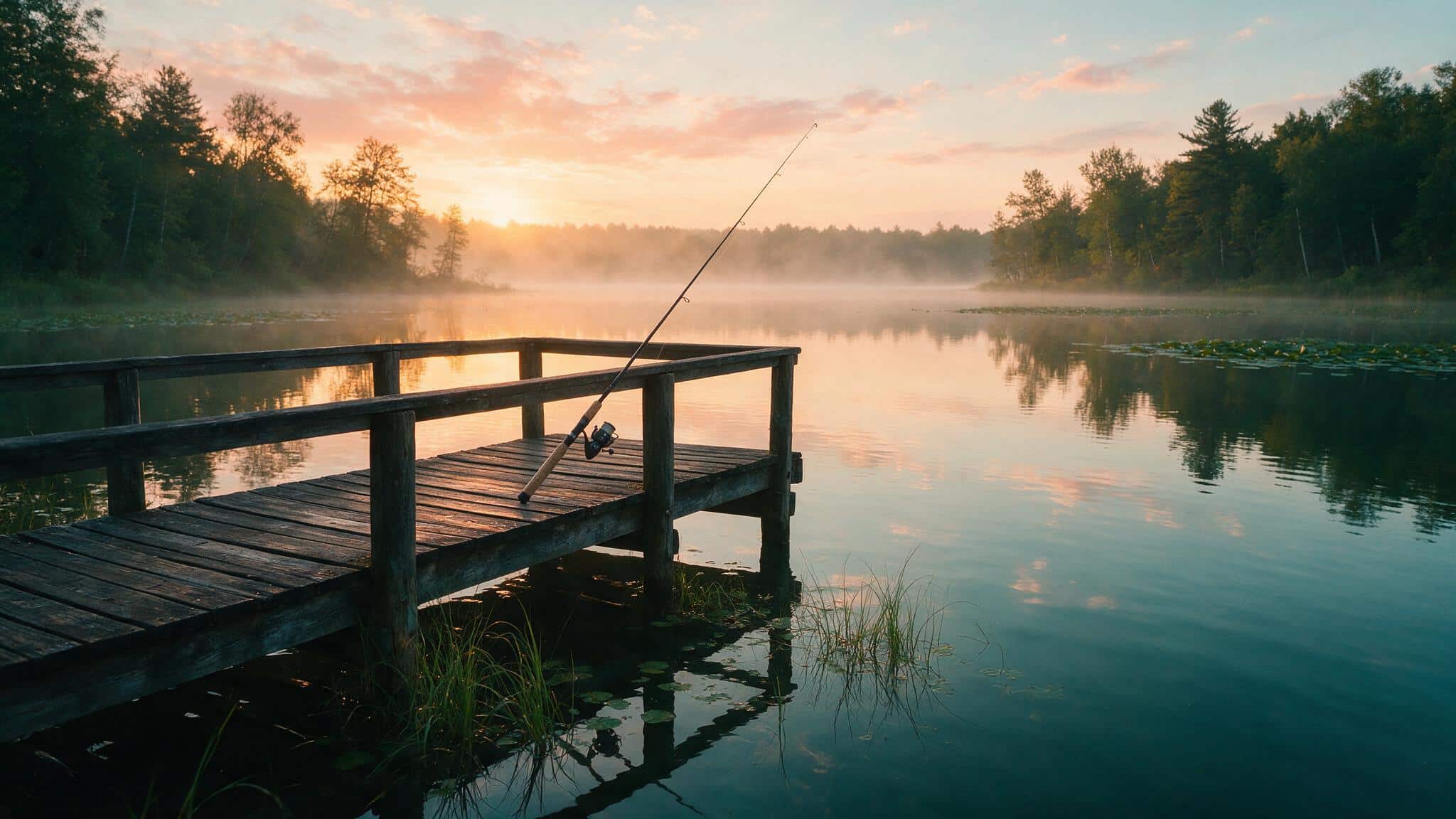
Lake fishing covers an enormous range of water, from farm pond fishing spots you can walk around in ten minutes to reservoirs so large they need their own weather reports. What ties it together is that lakes are mostly still water, which behaves very differently from a river or the ocean and rewards a different set of skills.
natural lakes versus reservoirs
Natural lakes tend to have more consistent, gradual depth changes and often formed thousands of years ago through glacial activity, which usually means richer, more established weed growth and forage. Reservoirs are man-made, created by damming a river, and they hold onto features from the land that got flooded: creek channels, old roadbeds, standing timber, even foundations in some older reservoirs. Both types hold fish well, but you read them differently. In a reservoir, following the old creek channel on a map or graph often leads you straight to where fish are holding, especially in the hotter months when that channel is the coolest, deepest water around.
structure that actually holds fish
Points are the single most reliable structure type across almost any lake. A point is where land extends into the water and the bottom slopes away on both sides, and it acts as a natural highway for fish moving between deep and shallow water. Drop-offs, where the bottom changes depth quickly, work similarly and are worth targeting whenever you find one near cover.
Weed lines matter most in warmer months, when they hold baitfish and oxygenate the water. Fishing the outside edge of a weed line, rather than burying a lure deep inside the vegetation, usually produces better results and far fewer snags. Standing timber and submerged brush piles create shade and ambush points, and they’re worth the risk of losing the occasional lure to hang-ups. Our guide on how to find good fishing spots breaks down reading structure and current on unfamiliar water.
how the season changes everything
Lake fish are creatures of temperature more than almost anything else. In early spring, shallow water warms first and pulls fish up onto flats and near banks to feed and spawn. Summer pushes many species deeper or into shaded cover during the hottest parts of the day, though early morning and evening can still produce shallow action. Fall often brings fish back shallow again as they feed heavily before winter, and this is genuinely one of my favorite stretches of the year to fish a lake, since the bite can be aggressive and the crowds thin out. Winter slows everything down, and fishing deep, slow, and patient tends to beat covering water fast.
bait, lures, and matching what’s in the water
What works changes lake to lake based on the forage base. If a lake is full of shad, a lure that imitates shad in size and color will usually outperform something generic. Live bait like worms, minnows, and crickets remains a reliable option almost everywhere and is a great way to introduce a kid to lake fishing without worrying about presentation technique. For lure anglers, having a few search baits to cover water quickly and a few finesse options for pressured or slow fish covers most situations you’ll run into on a lake through the season.
getting to the fish: shore, boat, or kayak
Shore fishing is the cheapest and most accessible way to fish a lake, and plenty of lakes have enough bank access and structure within casting range to keep a shore angler busy for years. A boat opens up the whole lake and lets you follow fish as they move through the season, but it comes with real cost and maintenance.
A kayak sits in between, and for a lot of lake anglers it’s genuinely the better option rather than just the cheaper one. It gets you off the bank and into water boats can’t always reach, like shallow coves and skinny water near timber, without the expense or hassle of boat ownership. If that sounds like your situation, our guide to kayak fishing walks through choosing a kayak and rigging it for exactly this kind of lake fishing.
public access and local knowledge
Most states maintain a list of public lakes and boat ramps through their wildlife or natural resources department, and it’s worth checking before you assume a lake near you is off limits. Local bait shops remain the fastest way to learn what’s actually biting on a given lake right now, since lake conditions and patterns shift throughout the season in ways general advice can’t predict. I still stop at the same shop near that old quarry lake every spring, mostly out of habit, but also because the guy behind the counter usually knows more about that water than any app I’ve tried.