Crappie lures fill entire aisles at tackle shops, and most of it is unnecessary once you understand what actually triggers a bite. A handful of jig heads, a dozen soft plastic bodies in the right colors, and a few live bait options cover essentially every situation you will run into over a season. I used to buy every new color that came out, convinced each one held some secret advantage, until I noticed I was catching the same numbers of fish with four core colors that I was with forty. If you have not read through our crappie fishing guide yet, it covers the seasonal patterns that decide when and where these lures actually get used.
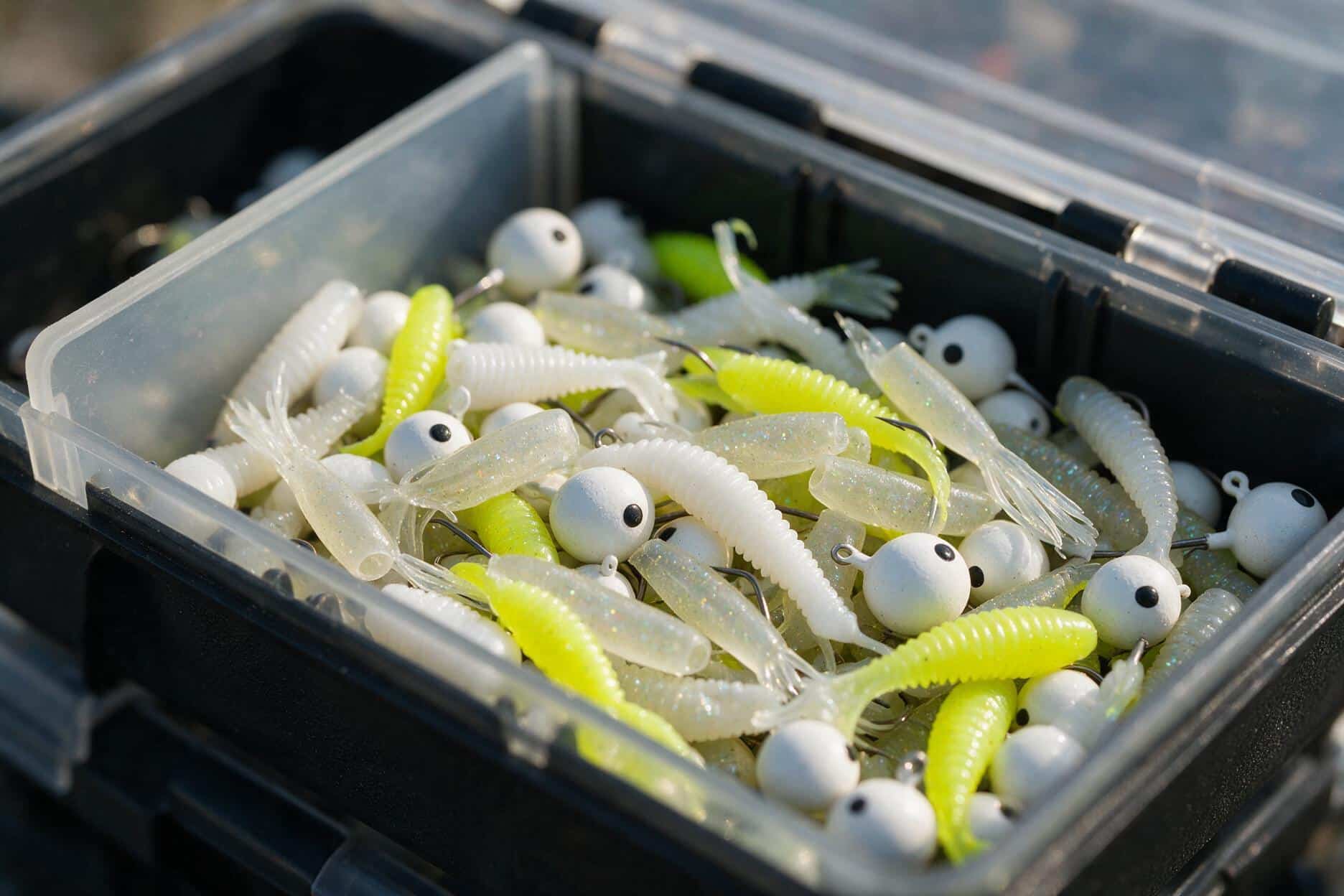
jig heads: the foundation of a crappie box
A plain round or banana-head jig in 1/32 to 1/8 ounce covers nearly every depth and condition a crappie angler runs into. Lighter heads, 1/32 and 1/16 ounce, fall slowly and work best in shallow water during the spring spawn or when fish are holding just under the surface. Heavier heads, up to 1/8 ounce, get a bait down fast to suspended fish holding 15 to 25 feet deep over brush or timber, where a slow-falling jig would take too long and lose the fish’s attention before it arrives.
Hook size matters as much as jig weight. Crappie have small mouths relative to their body size, and an oversized hook on a jig head reduces hookup rates even when fish are actively biting. Size 2 to 6 hooks match most soft plastic bodies used for crappie. Painted heads in white, chartreuse, or pink add a splash of color right at the point of the bite, which matters in stained water where the tail of a soft plastic might be the only part a fish sees clearly from a distance.
soft plastics: color choices that actually matter
Two-inch curly tail grubs and small paddle tail swimbaits make up the bulk of soft plastic crappie fishing. Tube baits work well too, particularly around brush and standing timber where a subtler profile slips through cover without hanging up as often. Tubes rigged on a light jig head slip through wood with fewer hang-ups than paddle tails, since the skirt collapses against the body rather than catching on branches, which matters around standing timber where losing gear on every other cast gets expensive fast.
Color selection comes down to water clarity more than personal preference. In clear water, natural and translucent colors, like smoke, clear with silver flake, or light green, blend in and draw more strikes from fish that get a good look before committing. In stained or muddy water, bright colors like chartreuse, white, or hot pink stand out enough for crappie to find them by silhouette and vibration rather than pure sight. I carry both categories and pick based on the water in front of me that day, not whatever color happened to catch fish last time out.
live bait still has a place
Small minnows fished under a slip float remain one of the most reliable crappie presentations ever devised, especially early in the spring before fish fully commit to aggressive feeding. Hook the minnow through the lips or just behind the dorsal fin, set the float to hold the bait at the depth fish are marking on electronics, and let the presentation sit with minimal movement. This is not a technique that requires skill so much as patience, which is exactly why it produces so consistently for anglers who are new to the species.
tipping jigs for extra bites
A plain soft plastic jig catches plenty of crappie on its own, but tipping the hook with a small piece of nightcrawler, a waxworm, or a commercial crappie nibble adds scent and taste that turns a follow into a strike on tougher days. This matters most in cold water, early spring and late fall, when fish are less willing to chase a lure moving under its own action. I keep a small tub of nibbles in the boat specifically for the days when jigs alone are not getting it done, which happens more often than most tackle marketing admits.
small crankbaits and spinners for covering water
Tiny crankbaits, in the 1 to 2 inch range, and small in-line spinners work well when crappie scatter across a flat rather than holding tight to a single piece of cover. Casting and slow-rolling these baits covers more water per cast than a jig fished vertically, which matters when you are searching for fish rather than working a spot you already know holds them.
how many colors you actually need
Four colors handle almost every situation: a natural translucent pattern for clear water, a solid white for general use, a chartreuse or bright pattern for stained water, and a black or dark pattern for low light or night fishing under lights. Everything past those four is a preference purchase, not a functional one, and tackle shops know it, which is exactly why the wall of colors keeps growing every season.
matching the retrieve to the mood of the fish
Aggressive fish, especially during the spring spawn, respond to a steady swimming retrieve or a jig worked with sharp twitches. Neutral or inactive fish, common in the heat of summer or the depths of winter, want the bait held nearly motionless, with only small rod tip movements to give it life. Watching how fish respond in the first ten minutes of a trip, and adjusting retrieve speed rather than switching lures constantly, saves more time than most anglers realize.
one storage habit worth adopting
Soft plastic baits made with different chemical formulas melt into each other when stored in the same compartment, turning a full pack of grubs into a fused, unusable block within a few weeks. Keep tube baits, curly tails, and paddle tails in separate compartments by brand and type, or you will open the tackle box one morning to find half your selection fused into a single unusable block.